

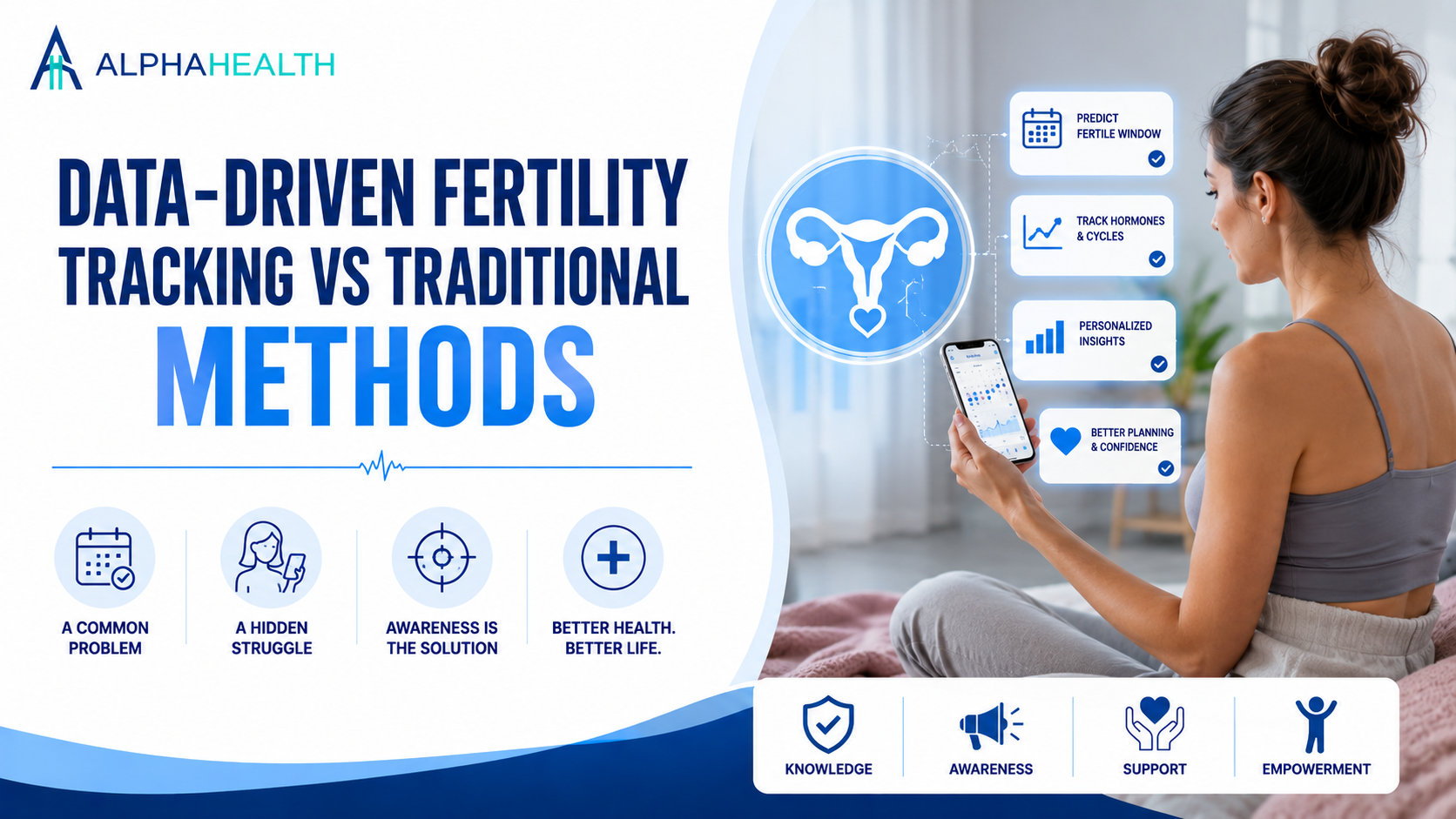
Data-Driven Fertility Tracking vs Traditional Methods: Which Approach Is Shaping the Future of Women's Fertility Health?

Introduction
For decades, women have relied on calendars, physical symptoms, and manual observations to understand their fertility cycles. While these traditional methods have helped countless women plan or prevent pregnancies, they often involve guesswork and can be difficult to maintain consistently.
Today, advances in FemTech are transforming fertility management. Data-driven fertility tracking tools use artificial intelligence, wearable technology, sensors, and personalized analytics to provide deeper insights into reproductive health than ever before.
As women become increasingly proactive about their health, the question arises: Are data-driven fertility tracking solutions more effective than traditional fertility awareness methods?
Let’s explore the differences, benefits, limitations, and future of fertility tracking.
Understanding Traditional Fertility Tracking Methods
Traditional fertility tracking is based on observing natural signs and symptoms associated with ovulation and the menstrual cycle.
Common traditional methods include:
Calendar Method
Women track menstrual cycle dates to estimate ovulation and fertile windows.
Basal Body Temperature (BBT)
This method involves taking body temperature every morning before getting out of bed.
A slight increase in temperature typically occurs after ovulation.
Cervical Mucus Observation
Changes in cervical mucus consistency can indicate approaching ovulation.
Symptom Tracking
Some women monitor symptoms such as:
- Mild pelvic pain
- Breast tenderness
- Mood changes
- Increased libido
These indicators help estimate fertility timing.
The Challenges of Traditional Fertility Tracking
Although widely used, traditional methods have several limitations.
Human Error
Missing a day of tracking or recording inaccurate information can affect results.
Irregular Menstrual Cycles
Women with irregular cycles often find calendar predictions unreliable.
Delayed Ovulation Detection
Methods like basal body temperature confirm ovulation after it has occurred, reducing predictive value.
Time-Consuming Process
Daily measurements and manual record keeping require consistency and discipline.
Limited Personalization
Traditional methods rarely account for lifestyle, stress, sleep quality, illness, or hormonal variations.
As a result, many women experience uncertainty about their fertility status.
What Is Data-Driven Fertility Tracking?
Data-driven fertility tracking combines health data collection with advanced analytics to provide personalized fertility insights.
These technologies often include:
- Mobile applications
- Wearable devices
- Smart thermometers
- Hormone-monitoring sensors
- Artificial intelligence algorithms
- Machine learning models
Instead of relying solely on averages, these tools analyze individual biological patterns.
The result is a more personalized understanding of fertility and reproductive health.
How Data-Driven Fertility Tracking Works
Modern fertility platforms collect multiple data points, including:
Menstrual Cycle Information
- Period start and end dates
- Cycle length
- Ovulation patterns
Physiological Measurements
- Basal body temperature
- Heart rate variability
- Resting heart rate
- Skin temperature
Lifestyle Factors
- Sleep quality
- Exercise levels
- Stress patterns
- Nutrition habits
Hormonal Data
Advanced fertility devices can measure:
- Luteinizing Hormone (LH)
- Estrogen
- Progesterone metabolites
AI algorithms analyze this information to predict fertile windows with greater precision.

Benefits of Data-Driven Fertility Tracking
Improved Accuracy
By combining multiple biological indicators, fertility technologies can identify fertile windows more precisely than relying on a single symptom.
Personalized Health Insights
Every woman has unique hormonal patterns.
Data-driven systems adapt to individual cycles rather than relying on population averages.
Early Pattern Detection
Technology can identify subtle changes that may indicate:
- Hormonal imbalances
- Cycle irregularities
- Ovulation issues
- Potential reproductive concerns
Increased Convenience
Many wearables collect data automatically during sleep or daily activities.
This reduces manual effort and improves consistency.
Long-Term Health Monitoring
Fertility data can provide valuable insights into broader aspects of women’s health, including:
- Stress management
- Sleep quality
- Hormonal health
- Menstrual wellness
The Role of Artificial Intelligence in Fertility Tracking
Artificial intelligence is becoming a major driver of innovation in reproductive health.
AI-powered fertility tools can:
Identify Trends
Algorithms recognize recurring patterns that may not be obvious to users.
Improve Predictions Over Time
The more data collected, the more personalized and accurate predictions become.
Deliver Customized Recommendations
Some platforms provide tailored suggestions related to:
- Lifestyle changes
- Sleep optimization
- Cycle management
- Fertility planning
This personalized approach is helping women make more informed decisions about their reproductive health.
When Traditional Methods Still Have Value
Despite technological advances, traditional fertility awareness methods remain useful.
They offer:
Low Cost
Most traditional techniques require little or no financial investment.
Greater Body Awareness
Women often develop a stronger understanding of natural fertility signals.
Accessibility
No devices or apps are necessary.
Backup Support
Traditional observations can complement digital fertility tracking systems.
In many cases, combining both approaches provides the best results.
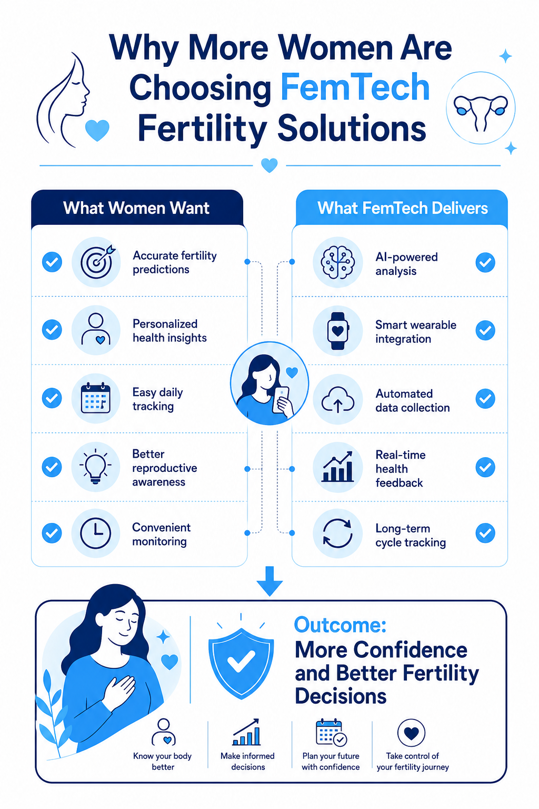
Beyond Fertility: The Broader Impact on Women’s Health
Modern fertility tracking technologies are no longer limited to conception planning.
They can help women:
Understand Hormonal Changes
Track cycle fluctuations and hormonal health patterns.
Monitor Menstrual Wellness
Identify irregularities and changes over time.
Support Pregnancy Planning
Optimize timing for conception efforts.
Improve Overall Wellbeing
Gain insights into sleep, stress, recovery, and lifestyle habits.
As FemTech evolves, fertility tracking is becoming part of a comprehensive women’s health ecosystem.
The Future of Fertility Tracking
The next generation of fertility technologies is expected to become even more sophisticated.
Emerging innovations include:
- Continuous hormone monitoring
- Advanced wearable biosensors
- Predictive reproductive health analytics
- AI-assisted fertility coaching
- Integration with telehealth services
These developments will allow women to access deeper, more actionable health insights while maintaining greater control over their reproductive journeys.
Conclusion
Traditional fertility tracking methods have supported women’s reproductive health for generations, but they often rely heavily on manual observations and estimations. Data-driven fertility tracking represents a significant advancement, combining artificial intelligence, wearable technology, and personalized analytics to provide more accurate and meaningful fertility insights.
Rather than replacing traditional methods entirely, modern FemTech solutions enhance fertility awareness by transforming raw health data into actionable knowledge. As technology continues to evolve, women are gaining unprecedented visibility into their reproductive health, empowering them to make informed decisions with greater confidence.
The future of fertility management is no longer based solely on prediction—it is driven by personalized data, smarter technology, and a deeper understanding of women’s health.