

How to Store and Handle Breast Milk Safely
Breast milk is a powerful source of nutrition, immunity, and bonding for your baby. Whether you’re a working mom, exclusively pumping, or combining breast and bottle feeding, learning how to store and handle breast milk safely is essential. Improper storage can cause a loss of nutrients or even make the milk unsafe for your baby. In this guide, we’ll walk you through everything you need to know, from pumping and storage to thawing and feeding. All while emphasizing the convenience and care provided by Alpha Health’s advanced hands-free breast pumps and storage accessories.
Why Safe Storage Matters
Breast milk is a living fluid, full of beneficial bacteria, antibodies, and enzymes. When not stored properly, it can spoil or lose some of its nutritional and immune-boosting benefits. Safe handling ensures your baby receives the milk in its purest, most nourishing form, and helps reduce the risk of contamination.
Step 1: Start with Clean Hands and Equipment
Before expressing or handling breast milk:
- Wash your hands thoroughly with soap and water.
- Ensure your breast pump, collection bottles, and storage containers are sterilized before use.
- Use BPA-free bottles or breast milk storage bags.
Tip: Alpha Health offers hospital-grade, hands-free wireless breast pumps that reduce manual contact, making the process more hygienic and efficient.
Step 2: Pumping and Collecting Breast Milk
Choose a comfortable, quiet space to pump. If you’re using an electric or wearable breast pump, make sure it’s properly fitted and adjusted to avoid discomfort or inefficient expression.
- Pump directly into sterilized bottles or storage bags.
- Use labels to mark the date and time on each container immediately after pumping.
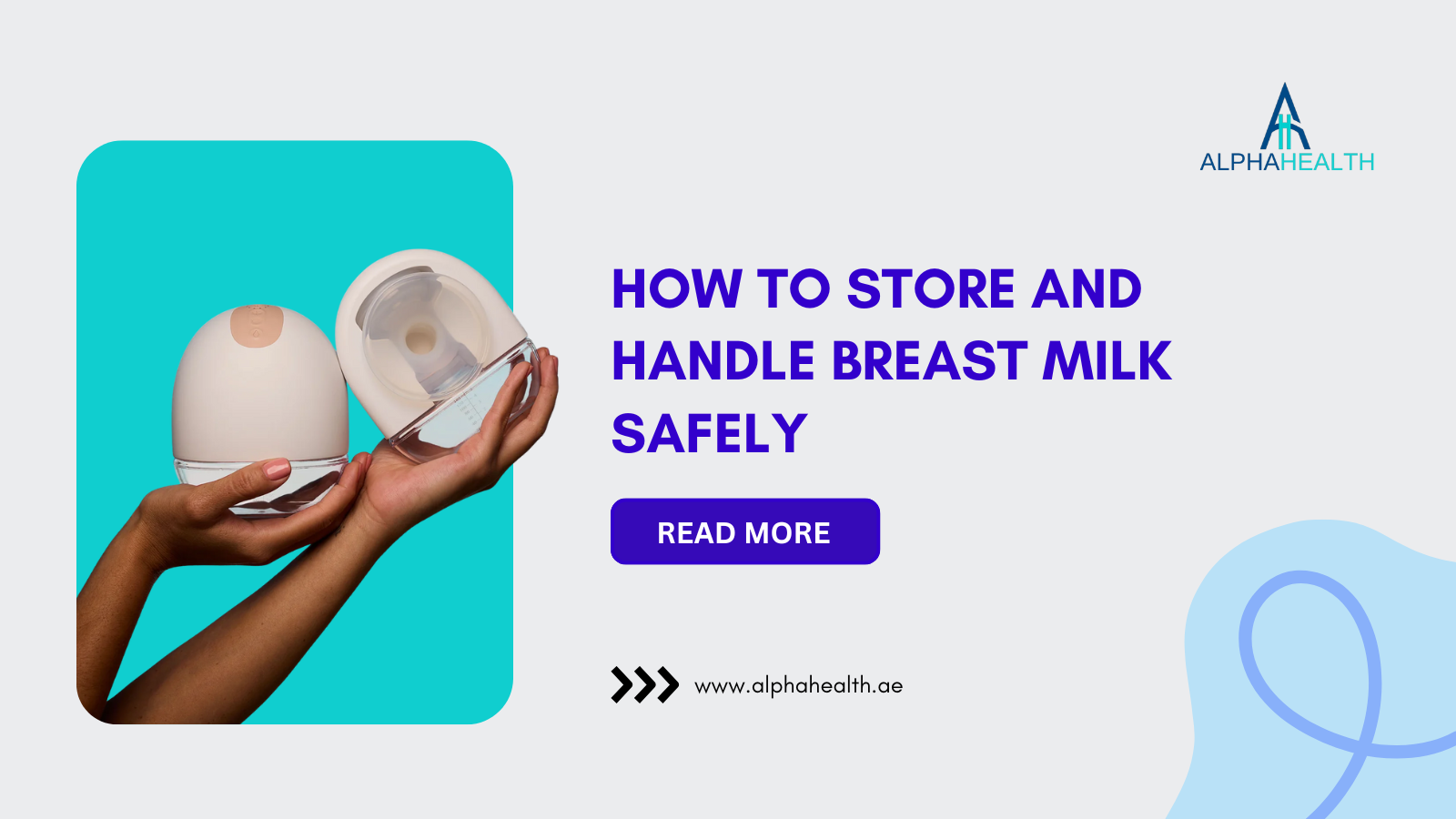
Alpha Health’s Perifit Hands-Free Breast Pump allows you to pump discreetly and comfortably on the go, without wires or noise, while keeping your milk safe in an enclosed system.
Step 3: Proper Breast Milk Storage Guidelines
Storage depends on where and how long you plan to keep the milk.
At Room Temperature (up to 25°C / 77°F)
- Freshly expressed breast milk can be kept at room temperature for up to 4 hours.
- If the room is warmer than 25°C, aim to refrigerate it within 2 hours.
In the Refrigerator (4°C / 39°F)
- Store breast milk in the back of the refrigerator (not the door) to maintain consistent cold temperature.
- Milk is safe in the fridge for up to 4 days, but it’s ideal to use within 2 days for maximum freshness.
In the Freezer
- Freezer compartment inside a refrigerator: Up to 2 weeks.
- Separate freezer unit with its own door: Up to 6 months is ideal, 12 months maximum.
Step 4: Thawing Frozen Breast Milk
Thawing should be done carefully to avoid nutrient loss:
- Refrigerator Thawing (Best Method): Place the frozen milk in the fridge overnight. Use within 24 hours.
- Warm Water Bath: Place the milk container in a bowl of warm water for 10 to 15 minutes.
- Avoid Microwaving: Microwaves can create hot spots and degrade nutrients in breast milk.
Once thawed:
- Do not refreeze the milk.
- Use within 2 hours of warming if kept at room temperature.
Pro Tip: Always swirl, not shake, the thawed milk to mix the fat layer that may have separated
Step 5: Feeding Stored Breast Milk
When feeding your baby with stored milk:
- Always check the temperature before feeding. The milk should feel warm but not hot.
- If your baby doesn’t finish the milk, discard the leftover after 2 hours.
- Do not add fresh milk to milk that has already been thawed or partially used.
Extra Tips for Safe Storage and Handling
1. Follow the First In, First Out Rule
Use the oldest stored milk first to ensure none goes to waste.
2. Store in Small Portions
Freeze or refrigerate in amounts of 60 to 120 ml (2 to 4 oz) to reduce wastage.
3. Use Quality Storage Containers
Use containers specifically designed for breast milk, free from BPA and chemicals.
4. Don’t Overfill Bottles
Leave some space in the container (about an inch) for expansion when freezing.
5. Keep a Storage Log
Track your pumping and storage schedule to stay organized.
Common Mistakes to Avoid
- Leaving breast milk out for too long before refrigerating.
- Reheating breast milk multiple times.
- Storing milk in disposable bottle liners or non-food-grade plastic.
- Forgetting to label bags with the date.
- Using milk past the recommended duration.
Alpha Health: Supporting Your Breastfeeding Journey
At Alpha Health, we understand that modern moms need convenience without compromise. That’s why our range of wireless, hands-free breast pumps is designed with hygiene, comfort, and efficiency in mind.
Try Our Bestseller: The Perifit Breast Pump
Wireless and completely hands-free, the Perifit pump frees you from the hassle of traditional pumping. Pump when you want, where you want—without changing your clothes. Slip it on, keep your shirt on, and go about your day with comfort and confidence.
Visit www.alphahealth.ae to explore our complete range and make breastfeeding simpler, safer, and smarter.
Conclusion
Safely storing and handling breast milk is a key part of your baby’s health and development. With a bit of knowledge and the right tools from Alpha Health, you can confidently feed your baby breast milk that is both safe and full of nourishment. Whether you’re at home, at work, or on the move, Alpha Health supports you every step of the way.
Because when it comes to your baby, only the best will do. Alpha Health is here to ensure you always have it within reach.