


Common Breastfeeding Challenges New Moms Face and How to Overcome Them
Breastfeeding is often described as a natural and instinctive process, yet for many new mothers, it can feel overwhelming and challenging especially in the early days. While breast milk is the best source of nutrition for newborns, the journey of breastfeeding is not always smooth. From physical discomfort to emotional stress, new moms may face several hurdles that can affect confidence and consistency.
The good news is that most breastfeeding challenges are common, temporary, and manageable with the right guidance and support. Understanding these issues and knowing how to overcome them can make breastfeeding a more comfortable and rewarding experience.
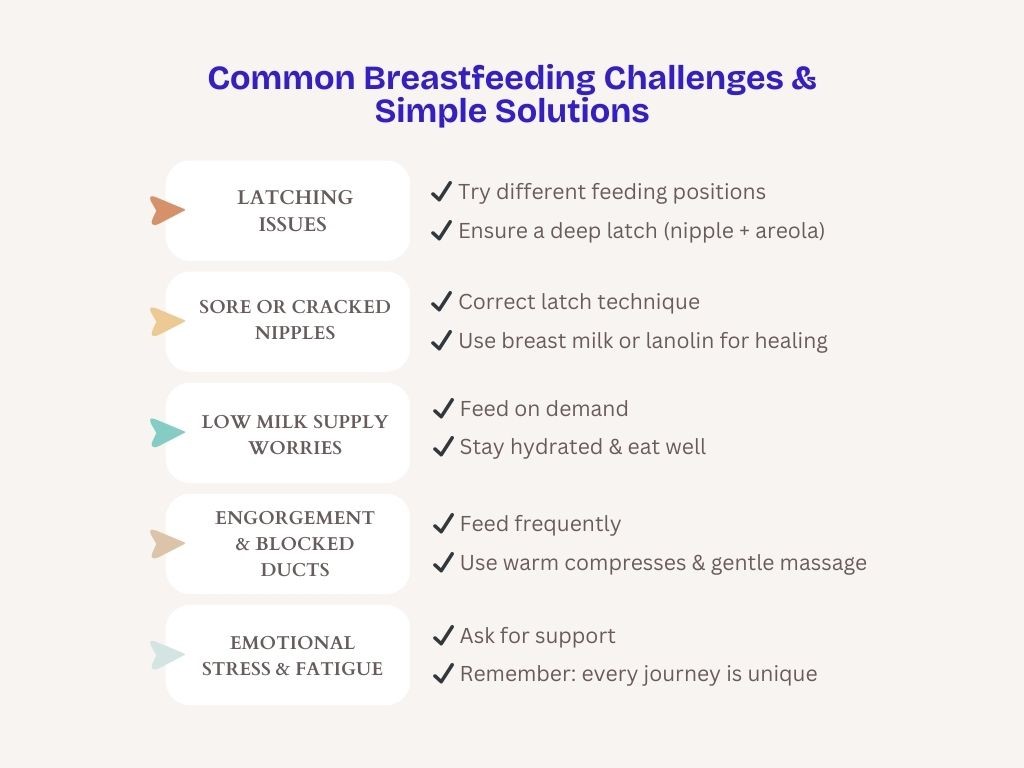
1. Difficulty with Latching
The Challenge
One of the most common issues new mothers face is getting the baby to latch properly. A poor latch can lead to ineffective feeding, sore nipples, and frustration for both mom and baby. Babies may latch shallowly, pull away frequently, or seem fussy during feeds.
How to Overcome It
- Ensure your baby’s mouth covers both the nipple and a good portion of the areola
- Try different breastfeeding positions such as cradle hold, football hold, or side-lying
- Bring the baby to the breast rather than leaning toward the baby
- Seek help from a lactation consultant early if latching issues persist
A correct latch not only improves milk transfer but also reduces pain and nipple damage.
2. Sore, Cracked, or Painful Nipples
The Challenge
Nipple pain is especially common in the first few weeks of breastfeeding. Cracked, bleeding, or tender nipples can make feeding uncomfortable and may discourage moms from continuing.
How to Overcome It
- Check and correct your baby’s latch
- Allow nipples to air-dry after feeding
- Apply breast milk or lanolin cream to soothe and heal
- Avoid harsh soaps or excessive washing of the nipples
Persistent pain is not “normal” and should be addressed promptly to prevent complications like infections.
3. Low Milk Supply Concerns
The Challenge
Many new moms worry they are not producing enough milk, especially when babies feed frequently or seem unsettled. This concern often leads to unnecessary stress or early supplementation.
How to Overcome It
- Feed your baby on demand rather than on a fixed schedule
- Ensure frequent and complete breast emptying
- Stay well-hydrated and maintain balanced nutrition
- Avoid comparing your milk output to others
In most cases, frequent feeding actually helps increase milk production, as supply works on a demand-and-supply basis.
4. Engorgement and Breast Fullness
The Challenge
Breast engorgement occurs when the breasts become overly full, swollen, and painful—usually when milk first comes in. Severe engorgement can make latching more difficult and uncomfortable.
How to Overcome It
- Feed frequently to prevent milk buildup
- Use warm compresses before feeding to encourage milk flow
- Apply cold compresses after feeding to reduce swelling
- Express a small amount of milk if breasts feel too firm
Managing engorgement early helps maintain comfort and supports ongoing breastfeeding success.
5. Blocked Milk Ducts
The Challenge
Blocked or clogged milk ducts feel like tender lumps in the breast and can interfere with milk flow. If left untreated, they may lead to mastitis.
How to Overcome It
- Continue breastfeeding on the affected side
- Gently massage the area during feeding
- Apply warm compresses before nursing
- Ensure proper breast emptying
Wearing well-fitting bras and avoiding prolonged pressure on the breasts can also help prevent blocked ducts.
6. Mastitis (Breast Infection)
The Challenge
Mastitis is a painful breast infection marked by redness, swelling, fever, and flu-like symptoms. It can be physically exhausting and emotionally draining.
How to Overcome It
- Continue breastfeeding or pumping to keep milk flowing
- Rest as much as possible
- Apply warm compresses to the affected area
- Seek medical treatment promptly if symptoms worsen
Early intervention can prevent complications and speed up recovery.
7. Baby Falling Asleep During Feeds
The Challenge
Some newborns fall asleep quickly while breastfeeding, resulting in shorter or ineffective feeds. This may affect milk intake and weight gain.
How to Overcome It
- Gently stimulate your baby by tickling feet or rubbing the back
- Switch breasts when sucking slows
- Keep feeding sessions calm but alert
- Feed when your baby shows early hunger cues
Keeping the baby engaged ensures they receive enough milk during each feed.
8. Emotional Stress and Lack of Confidence
The Challenge
Hormonal changes, sleep deprivation, and pressure to “do everything right” can make breastfeeding emotionally challenging. Some moms may feel guilty, anxious, or overwhelmed.
How to Overcome It
- Remember that every breastfeeding journey is unique
- Seek support from family, healthcare providers, or breastfeeding groups
- Set realistic expectations for yourself
- Focus on progress, not perfection
Mental well-being is just as important as physical health in a successful breastfeeding journey.
Conclusion
Breastfeeding challenges are far more common than most new moms realize, and facing them does not mean failure. With the right information, timely support, and a compassionate approach toward yourself, these obstacles can be overcome.
Breastfeeding is a learning process for both mother and baby. Patience, confidence, and support play a crucial role in making the experience fulfilling and sustainable. Remember, seeking help is a sign of strength, not weakness, and every small step forward is a success worth celebrating.