


Fertility Awareness vs. Traditional Birth Control: Why More Women Are Choosing Natural Methods
In a world increasingly driven by wellness, balance, and holistic living, more women are taking control of their reproductive health, not by turning to synthetic hormones or invasive devices, but by tuning in to their own bodies. Fertility awareness, often referred to as Natural Family Planning (NFP) or Fertility Awareness-Based Methods (FABMs), is making a strong comeback as a natural, hormone-free way to manage fertility.
But how does it really compare to traditional birth control methods? And why are so many women choosing to embrace a more natural path? Let’s explore the science, the benefits, and the empowering reasons behind this growing shift.
Understanding Fertility Awareness
Fertility awareness is based on a simple yet powerful concept, your body naturally signals when you are fertile and when you are not. By learning to interpret these signs, women can identify the fertile window in their cycle and make informed decisions, whether they’re trying to conceive or avoid pregnancy.
The three key fertility signs include:
- Basal Body Temperature (BBT):
After ovulation, a woman’s body temperature rises slightly (by about 0.2–0.5°C). Tracking this temperature every morning helps identify when ovulation has occurred. - Cervical Mucus Patterns:
As ovulation approaches, cervical mucus becomes clear, stretchy, and slippery, a sign of peak fertility. Post-ovulation, it thickens and dries, indicating a less fertile phase. - Cervical Position and Firmness:
Some women also track changes in the cervix itself, it becomes higher, softer, and more open during ovulation, and firmer afterward.
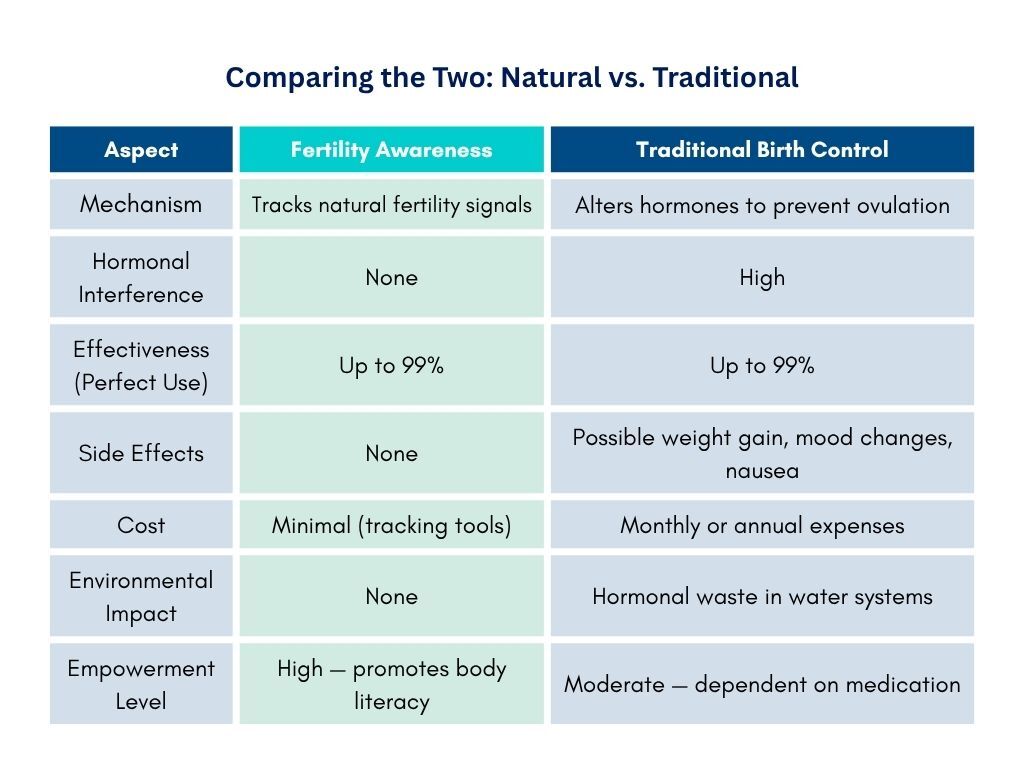
By recording and interpreting these natural cues daily, women gain deep insight into their reproductive cycle. With consistency, fertility awareness methods can be up to 98% effective in preventing pregnancy when used correctly, comparable to many conventional birth control options.
Traditional Birth Control: The Conventional Approach
For decades, hormonal birth control methods such as the pill, IUDs, implants, patches, and injections have been the standard choice for family planning. These options work primarily by preventing ovulation, thickening cervical mucus, or altering the uterine lining.
While highly effective, they come with notable side effects and drawbacks, including:
- Hormonal imbalance: Synthetic hormones can disrupt the body’s natural rhythm, leading to mood swings, fatigue, and libido changes.
- Weight gain and bloating: Common concerns among long-term users.
- Risk of blood clots: Particularly with estrogen-based contraceptives.
- Reduced natural fertility signals: Prolonged use can make it difficult for women to understand their natural cycle once they stop.
Traditional methods also place the responsibility entirely on the woman’s body through external intervention, something many now question as unnecessary in an era that values body autonomy and natural health.
Why the Shift Toward Natural Methods?
The rise in fertility awareness reflects a broader movement, one that prioritizes body literacy, holistic wellness, and long-term health. Here’s why more women are saying no to hormones and yes to natural methods:
1. Desire for Hormone-Free Living
Many women today are choosing to eliminate unnecessary chemicals and hormones from their lives, from skincare to diet, and now, contraception. Fertility awareness aligns perfectly with this philosophy, as it allows the body to function naturally without artificial hormonal interference.
2. Empowerment Through Knowledge
Understanding one’s own fertility signals creates a profound sense of empowerment. Women who practice fertility awareness report feeling more connected to their cycles and more in tune with their overall health. It transforms fertility from a mystery into an accessible, predictable rhythm.
3. Improved Mental and Physical Health
Without synthetic hormones, women often experience better mood stability, higher libido, and improved overall vitality. Many also report relief from side effects like migraines, bloating, and emotional fatigue that often accompany traditional methods.
4. Supports Natural Family Planning
Fertility awareness isn’t just for avoiding pregnancy — it’s equally effective for those trying to conceive. By pinpointing ovulation precisely, couples can optimize their chances of conception naturally, without invasive fertility treatments.
5. Sustainability and Accessibility
Unlike pills, patches, or devices that require prescriptions, fertility awareness relies on observation, not medication. It’s sustainable, affordable, and environmentally friendly — leaving no chemical residue or medical waste.
How Effective Is Fertility Awareness?
Effectiveness depends largely on consistency and proper education. When practiced with discipline, modern fertility awareness methods — such as the Symptothermal Method — have an effectiveness rate of 97–99% with perfect use, comparable to the pill.
However, success requires:
- Daily tracking of symptoms
- Understanding fertile window patterns
- Partner cooperation and shared responsibility
Many women use digital fertility trackers and mobile apps to make charting more convenient and accurate. This blend of technology and body awareness is revolutionizing how women approach fertility, bridging science with nature.
The Emotional and Relationship Benefits
Fertility awareness fosters deeper communication and collaboration between partners. Unlike traditional methods where contraception often becomes one partner’s sole responsibility, this natural approach encourages shared awareness and respect for the woman’s body rhythms.
Couples practicing fertility awareness often report enhanced intimacy, trust, and understanding, as both partners learn to appreciate the cyclical nature of fertility and adjust their connection accordingly.
Is It for Everyone?
Fertility awareness requires commitment, patience, and consistency. It may not be suitable for women with irregular cycles, recent childbirth, or certain health conditions that affect hormone patterns. However, with the right guidance from a fertility educator or healthcare professional, most women can learn to track and interpret their cycles effectively.
It’s also important to note that fertility awareness does not protect against sexually transmitted infections (STIs), so additional protection is recommended in such cases.
How to Get Started
- Learn the Basics:
Begin by understanding your cycle phases — menstruation, follicular, ovulation, and luteal. - Track Daily:
Use a basal thermometer and observe cervical mucus changes every day. - Use a Reliable App or Chart:
Tools like Kindara, Natural Cycles, or Clue help record and analyze data. - Consult a Fertility Educator:
Proper training ensures accuracy and confidence in reading your signs. - Stay Consistent:
The more cycles you track, the clearer your unique fertility patterns become.
The Future of Natural Fertility Awareness
As wellness movements continue to redefine modern healthcare, fertility awareness is gaining recognition as a science-backed, holistic alternative. It’s no longer viewed as an old-fashioned or unreliable method, but rather as an informed, empowering choice that aligns with the modern woman’s pursuit of balance, health, and autonomy.
From smart fertility tracking devices to community-based education, the world is witnessing a shift toward natural reproductive wellness, one where women take center stage in understanding and nurturing their bodies.
Conclusion
Choosing how to manage fertility is deeply personal. For many women, the shift toward fertility awareness isn’t just about avoiding synthetic hormones, It’s about reclaiming control, confidence, and connection with their natural rhythm.
By listening to the body and respecting its signals, fertility awareness transforms family planning into an act of mindfulness and empowerment. It reminds us that sometimes, the most advanced solutions are the ones nature designed for us all along.