

The Role of Neuroplasticity in Recovering from Major Depressive Disorder
Major Depressive Disorder (MDD) has long been treated as a chemical imbalance in the brain, but modern neuroscience shows a richer, more hopeful story: the depressed brain is still capable of change. Neuroplasticity, the brain’s ability to reorganize its structure, function, and connections in response to experience, plays a central role in both the development of depression and recovery from it. Understanding neuroplasticity helps clinicians and patients alike see why medications, psychotherapy, stimulation therapies, exercise, and lifestyle changes can all produce meaningful recovery.
What is neuroplasticity and why it matters in MDD
Neuroplasticity includes a range of biological processes: synaptic strengthening or pruning, the creation of new synapses, growth of axons and dendrites, changes in myelination, and even adult neurogenesis (the birth of new neurons, especially in the hippocampus). These processes are governed by molecular signals, notably brain-derived neurotrophic factor (BDNF) and its receptor TrkB, and by activity patterns across brain networks. In MDD, many of these adaptive mechanisms are blunted: reduced BDNF expression, altered connectivity in mood-regulating circuits (prefrontal cortex, hippocampus, amygdala), and impaired ability to form new adaptive associations. That means symptoms such as low mood, cognitive sluggishness, and rigid negative thinking are not just psychological, they reflect a brain that has become less flexible.
How treatments harness plasticity to produce recovery
The variety of treatments that help people recover from MDD share a common theme: they promote or restore adaptive plasticity.
- Antidepressant medications. Traditional antidepressants (SSRIs, SNRIs, tricyclics) gradually increase synaptic signaling and are associated with raised BDNF levels and downstream synaptic remodeling over weeks to months. This helps restore hippocampal structure and prefrontal control circuits that regulate mood and thinking.
- Rapid-acting agents (e.g., ketamine). Some newer treatments produce strikingly fast antidepressant effects by acutely opening a “window” of heightened plasticity. Ketamine, for example, triggers molecular cascades that quickly increase synaptogenesis and functional connectivity, which can translate clinically into mood improvement within hours to days for treatment-resistant patients. This rapid plasticity provides an opportunity to pair medication with therapy or behavioral changes to consolidate gains.
- Psychotherapies (CBT, interpersonal therapy). Psychotherapy isn’t just talking; it trains new patterns of thought and behavior and thereby sculpts neural circuits. Neuroimaging studies show that successful cognitive behavioral therapy (CBT) and other evidence-based psychotherapies produce measurable changes in brain activity and connectivity in prefrontal and limbic regions tied to emotion regulation. Over time, therapy strengthens top-down control networks that reduce reactivity to negative thoughts and stressors.
- Brain stimulation therapies. Repetitive transcranial magnetic stimulation (rTMS) and electroconvulsive therapy (ECT) directly modulate cortical excitability and can induce structural and functional plasticity, improving connectivity and cortical thickness in mood-related regions. These approaches are clinical options when medication and psychotherapy are insufficient.
Neurosensory Device: A Breakthrough in Depression Care
An innovative and accessible brain stimulation option is Alpha Health’s Neurosensory Device, a non-invasive transcranial direct current stimulation (tDCS) technology designed to help alleviate depressive symptoms. Worn comfortably over the head and controlled through a mobile app, the device gently delivers low electrical currents to targeted brain regions, modulating neuronal excitability and supporting healthier brain activity.
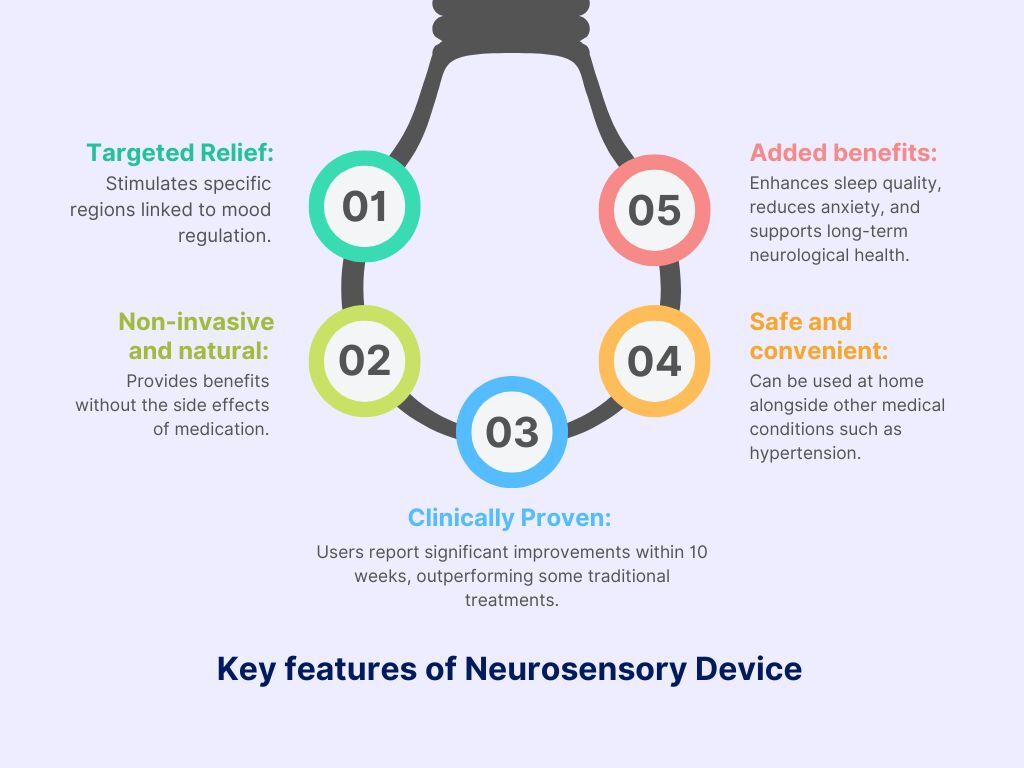
The device works by modulating neuronal excitability, enhancing the brain’s plasticity, and creating conditions where healthier mood patterns can take hold. This makes it an excellent complementary or standalone tool for patients seeking safe, effective, and medication-free support.
- Lifestyle interventions (exercise, sleep, nutrition). Physical activity increases peripheral and central BDNF, enhances neurogenesis, and improves synaptic plasticity. Good sleep and anti-inflammatory nutrition also support the molecular environment for plastic change. These nonpharmacological approaches both complement formal treatments and offer accessible ways for patients to actively support recovery.
Why timing and combination matter: the “plasticity window” concept
A useful clinical insight emerging from plasticity research is that certain treatments open a transient window of enhanced plasticity. During this window, the brain is more receptive to learning and re-wiring, so combining biological treatments with targeted psychotherapy, behavioral activation, or skills training can lock in healthier patterns. In contrast, treating a symptom pharmacologically without providing new cognitive or behavioral patterns risks relapse once the plasticity window closes. This is why integrated approaches often yield the most durable results.
Practical implications for clinicians and patients
- Personalize treatment: Assess symptom severity, treatment history, and patient preferences; use pharmacology, psychotherapy, stimulation, and lifestyle tools in a plan tailored to the individual.
- Sequence strategically: For treatment-resistant cases, consider interventions that rapidly boost plasticity followed by therapy to solidify adaptive changes.
- Encourage active participation: Recovery is maximized when patients engage in learning-oriented therapies and lifestyle changes during periods of biological receptivity.
- Monitor and support neurobiological health: Promote sleep hygiene, exercise, anti-inflammatory eating patterns, and stress reduction as foundation stones for healthy plasticity.
- Set realistic expectations: Some treatments act quickly, others take weeks. Even when biological changes occur, behavioral consolidation through therapy and practice is essential for long-term improvement.
Emerging directions and hope for the future
Research on psychoplastogens (compounds that promote plasticity), targeted neuromodulation, and biomarkers of plasticity (e.g., peripheral BDNF trends, neuroimaging markers) promises more personalized and faster pathways to recovery. Devices such as Neurosensory Device illustrate how innovation is moving beyond traditional approaches, making neurolinguistics-driven treatments more accessible to patients at home. Scientists are also clarifying how inflammation, epigenetic changes, and glial cell dysfunction intersect with plasticity, opening avenues for novel adjunctive treatments. While these advances require careful clinical trials, they underscore a shift: depression is increasingly seen as a treatable disorder of brain adaptability rather than a fixed brain defect.
Takeaway: depression recovery is possible because the brain can change
Neuroplasticity reframes Major Depressive Disorder not as a permanent brain injury but as a reversible pattern of neural function that, given the right biological and experiential inputs, can be remodeled. By combining medications or neuromodulatory tools that restore biological capacity for change with psychotherapies and lifestyle practices that teach better habits, clinicians and patients can work together to rebuild resilient brain networks, and with them, restored mood, cognition, and quality of life.
Neurosensory Device embodies this principle by offering safe, non-invasive stimulation that supports neuroplasticity, improves emotional regulation, and provides a drug-free alternative to traditional treatments. This integrated, technology-driven approach empowers patients to take recovery into their own hands while working alongside professional care, giving them the best chances for lasting well-being.