


Remote Patient Monitoring: How Contactless Monitoring Works (Dozee Explained)
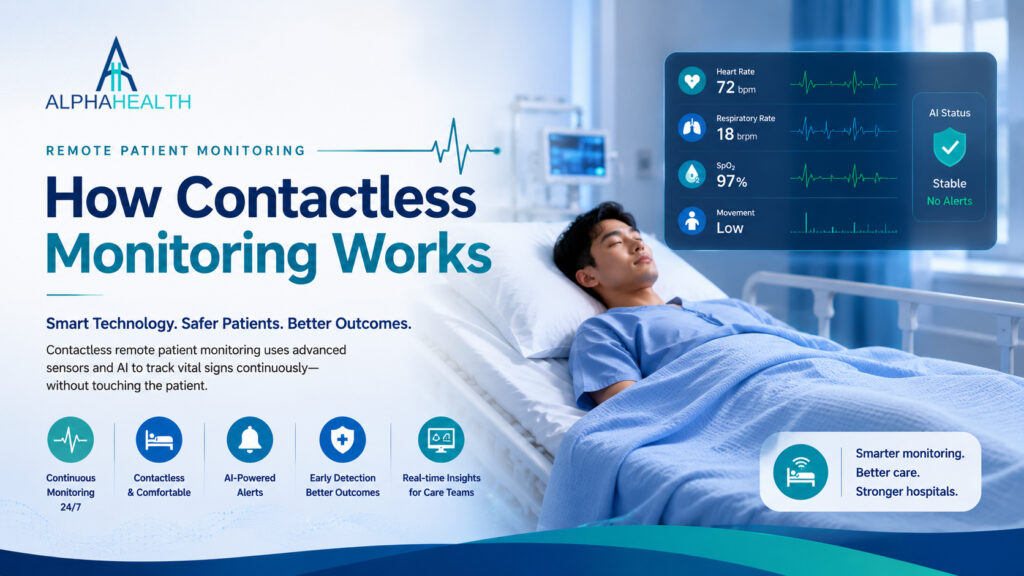
In today’s healthcare landscape, hospitals are rapidly adopting smart technologies that improve patient safety, reduce staff burden, and enable faster medical intervention. One of the most impactful innovations leading this transformation is Remote Patient Monitoring (RPM) — especially contactless monitoring systems like Dozee.
At Alpha Health, we believe advanced patient monitoring should be efficient, accurate, and comfortable for patients. Contactless monitoring is helping hospitals move toward safer and smarter care delivery.
What Is Remote Patient Monitoring?
Remote Patient Monitoring (RPM) is a healthcare technology that continuously tracks a patient’s vital signs without requiring constant manual checks by healthcare staff.
Traditional monitoring methods often rely on:
- Wired devices
- Frequent nurse visits
- Manual recording
- Physical contact sensors
Modern RPM systems automate this process and provide real-time patient insights directly to healthcare professionals.
What Is Contactless Patient Monitoring?
Contactless monitoring allows vital signs to be tracked without attaching sensors or wires directly to the patient’s body.
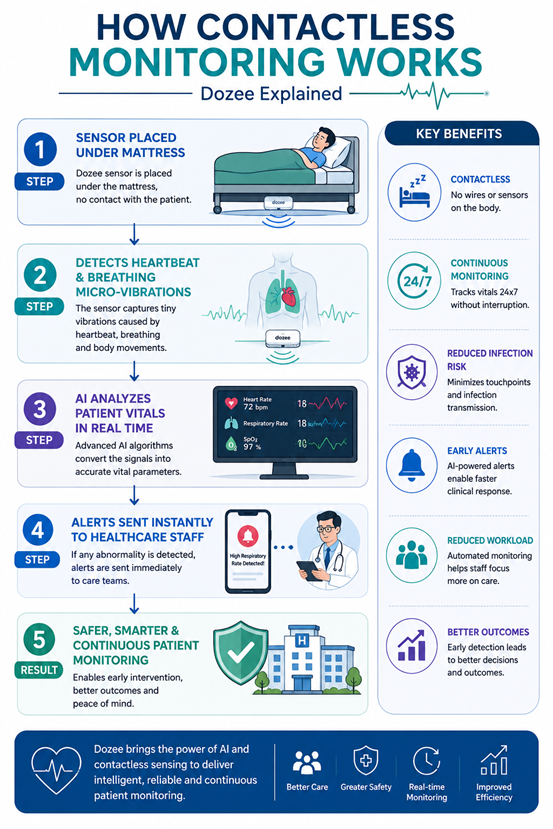
Systems like Dozee use advanced sensor technology placed beneath the mattress to monitor:
- Heart Rate
- Respiratory Rate
- Oxygen Saturation
- Sleep Patterns
- Patient Movement
- Early Deterioration Indicators
This creates a more comfortable experience for patients while ensuring continuous clinical observation.
How Does Dozee Contactless Monitoring Work?
Dozee uses a ballistocardiography-based sensor system, which detects micro-vibrations generated by the human body.
The sensor is placed under the mattress and captures tiny physiological signals caused by:
- Heartbeats
- Breathing movements
- Body motion
These signals are processed using AI-powered algorithms that convert them into real-time vital data.
The information is then:
- Analyzed instantly
- Sent securely to healthcare dashboards
- Used to trigger alerts if abnormalities are detected
This allows doctors and nurses to monitor multiple patients continuously from a centralized system.
Why Hospitals Are Adopting Contactless Monitoring
1. Continuous Real-Time Monitoring
Unlike periodic manual checks, contactless systems monitor patients 24/7 without interruption.
This helps detect:
- Sudden deterioration
- Breathing irregularities
- Cardiac abnormalities
- Patient distress
before they become critical emergencies.
2. Reduced Infection Risk
Since there are fewer wires and direct-contact devices, hospitals can reduce physical touchpoints and minimize infection transmission risks.
This became especially important during the COVID-19 pandemic and continues to support better infection control practices today.
3. Better Patient Comfort
Patients can rest naturally without:
- Sticky electrodes
- Finger clips
- Excessive wires
This improves sleep quality and overall patient experience.
4. Faster Clinical Response
AI-based alert systems notify healthcare teams instantly when patient vitals move outside safe ranges.
This enables:
- Early intervention
- Quicker response times
- Improved patient outcomes
5. Lower Workload for Nursing Staff
Automated monitoring reduces the need for repeated manual vital checks, allowing nurses to focus more on patient care rather than routine documentation.
Use Cases in Hospitals
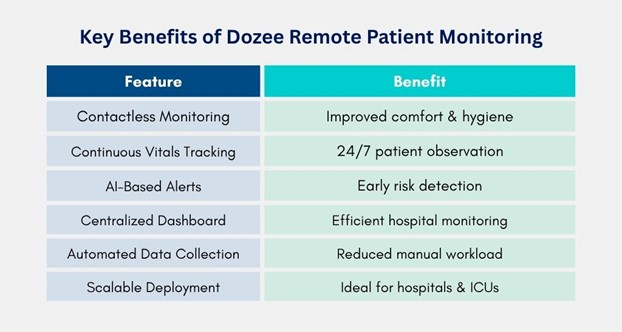
Contactless monitoring systems like Dozee are commonly used in:
- Intensive Care Units (ICUs)
- General Wards
- Post-Surgery Recovery
- Step-Down Units
- Elderly Patient Monitoring
- Isolation Rooms
- Home Healthcare Monitoring
Hospitals can monitor patients more efficiently while improving clinical decision-making.
The Future of Smart Patient Monitoring
Healthcare is shifting toward connected, intelligent systems that prioritize:
- Early detection
- Predictive healthcare
- Patient comfort
- Operational efficiency
Remote patient monitoring is no longer a future concept — it is becoming a standard requirement in modern hospitals.
With AI-powered contactless systems like Dozee, healthcare providers can deliver safer, faster, and more proactive care.
Conclusion
Contactless Remote Patient Monitoring is revolutionizing healthcare by making patient observation smarter, safer, and more efficient.
Solutions like Dozee provide hospitals with continuous, automated monitoring while enhancing patient comfort and improving clinical outcomes.
At Alpha Health, we support healthcare institutions with advanced monitoring technologies that help build the future of connected patient care.