


PCOD vs. PCOS: Understanding the Difference
Introduction
The health of female reproduction represents a challenging concept which people typically do not understand well. The two prominent yet poorly understood conditions affecting this medical field are PCOD (Polycystic Ovarian Disease) and PCOS (Polycystic Ovary Syndrome). PCOD and PCOS represent unique conditions that exhibit different signs and origin factors in addition to their distinctive treatment methods.
Alpha Health functions as a women-focused wellness brand that delivers medically-based solutions support and clear information to enable female empowerment in health management. The information in this article compares PCOD to PCOS by outlining their contrasting characteristics together with their origin along with their indicators for identification and treatment possibilities.
What Is PCOD?
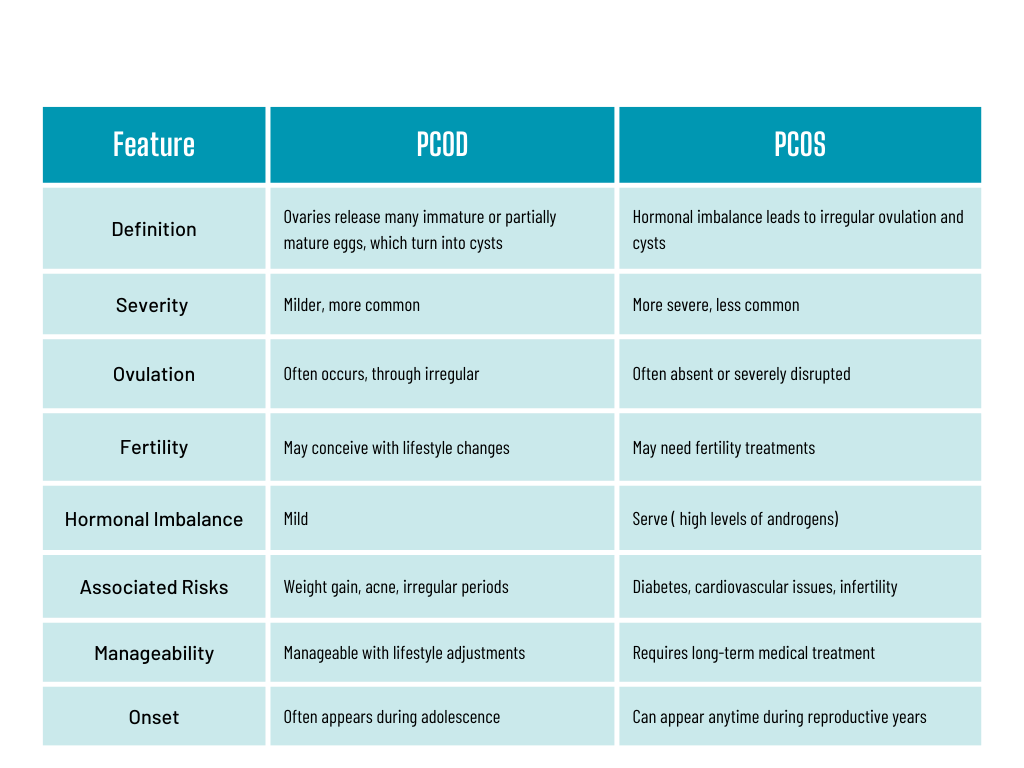
The ovaries of women with PCOD release numerous unripe or underdeveloped eggs. Time creates cysts from these eggs which form on the ovaries. The disturbance of hormone levels caused by PCOS produces problems including abnormal menstruation cycles as well as weight increase and inability to become pregnant.
Key Characteristics of PCOD:
- It is more common and affects about 1 in 3 women.
- The ovaries are usually slightly enlarged.
- The condition stems primarily from poor lifestyle choices, including stress, diet, and lack of exercise.
- Women with PCOD often ovulate and can conceive naturally with minor medical help.
- It does not usually lead to serious health complications if managed well.
What Is PCOS?
The medical condition PCOS (Polycystic Ovary Syndrome) represents a serious combination of metabolic and endocrine disorder. The medical condition is distinguished by hormonal disruptions resulting in elevated male hormone amounts that block ovulation processes and causes formation of multiple cysts in the ovaries.
Key Characteristics of PCOS:
- The disease occurs in one out of ten women across the world.
- The disease belongs to the endocrine system and shows genetic roots and environmental triggers during development.
- PCOS creates infertility when it causes a woman to completely lack the ability to release eggs for conception.
- The condition exposes women to numerous long-lasting health risks which involve Type 2 diabetes and heart disease and endometrial cancer.
- Women who have PCOS must continue medical care since the condition persists throughout their lifetime.
Causes of PCOD and PCOS
PCOD Causes:
- Unhealthy diet and sedentary lifestyle
- Stress and emotional imbalances
- Obesity or rapid weight gain
- Hormonal imbalance due to external factors
PCOS Causes:
- Genetic predisposition
- Insulin resistance, leading to increased androgen levels
- Chronic inflammation
- Environmental and hormonal disruptions
Symptoms: How to Recognize Each Condition
Common PCOD Symptoms:
- Irregular periods
- Mild weight gain
- Oily skin and acne
- Hair thinning
- Fatigue
- Ovarian enlargement (visible in ultrasound)
Common PCOS Symptoms:
- Amenorrhea (no periods) or irregular menstruation
- Hirsutism (excess facial/body hair)
- Obesity, especially around the abdomen
- Hair loss or male-pattern baldness
- Severe acne
- Infertility
- Depression or anxiety
Diagnosis: How Are PCOD and PCOS Diagnosed?
Gynecological examinations commonly identify these conditions although their official specifications for diagnosis are different.
PCOD Diagnosis:
- The examination with pelvic ultrasound looks for ovarian cysts.
- Blood tests for hormone levels
- Symptom evaluation (irregular periods, acne, weight gain)
PCOS Diagnosis:
According to the Rotterdam criteria, two out of three conditions must be met:
- Irregular or no ovulation
- Clinical or biochemical signs of hyperandrogenism (excess androgens)
- Polycystic ovaries on ultrasound
Additional tests for PCOS may include:
- Glucose tolerance test
- Lipid profile
- Thyroid function test
- Insulin resistance markers
Treatment Options for PCOD and PCOS
- Lifestyle Management (Essential for Both)
Weight Management: Even a 5-10% weight reduction can improve symptoms.
Balanced Diet: High-fiber, low-GI foods, and anti-inflammatory ingredients.
Regular Exercise: At least 30–45 minutes of daily activity helps manage insulin sensitivity and hormone levels.
Stress Reduction: Meditation, therapy, and adequate sleep.
- Medical Treatment
For PCOD:
l Oral contraceptives to regulate periods
- Anti-androgens to manage acne and hair growth
- Metformin (in some cases) for insulin regulation
For PCOS:
- Hormonal therapy to regulate periods and reduce androgen production
- Metformin to address insulin resistance
- Clomiphene citrate or Letrozole for inducing ovulation (in fertility treatment)
- Spironolactone for hirsutism and acne
- Surgical Interventions
The treatment method known as ovarian drilling rarely finds success in managing PCOS (when medication does not work)
The medical procedure of laparoscopy serves both diagnostic and therapeutic functions during severe complications management.
Fertility and Pregnancy: What Women Should Know
PCOD and Fertility: Female patients with PCOD usually show positive outcomes when pursuing pregnancy. Weight management combined with healthy life choices and low-dose medication enables many women to achieve natural conception.
PCOS and Fertility:
Women with PCOS may require fertility treatments due to the absence of ovulation. Options include:
- Ovulation induction with drugs
- Intrauterine Insemination (IUI)
- In Vitro Fertilization (IVF)
- However, with the right treatment plan, pregnancy is still very possible.
Long-Term Health Implications
PCOD Risks (if unmanaged):
- Irregular menstruation
- Weight-related complications
- Mild hormonal issues
PCOS Risks (if unmanaged):
l Type 2 diabetes
l High blood pressure
l Endometrial cancer
l Sleep apnea
- Heart disease
- Infertility
How Alpha Health Supports Women with PCOD and PCOS
Female patients with PCOD usually show positive outcomes when pursuing pregnancy. Weight management combined with healthy life choices and low-dose medication enables many women to achieve natural conception
- Home-use medical devices for monitoring ovulation, glucose, and hormone levels
- Wellness tools such as hormone-friendly supplements and body mass tracking equipment
- Educational materials enable women to make better health decisions through knowledge enhancement.
- The workplace should support its employees through female-specific health trackers and wellness kits.
The mission of our organization is to connect women to the healthcare they need starting from basic awareness through daily health supervision.
Conclusion
The medical conditions PCOD and PCOS share comparable features yet remain different conditions needing different treatment strategies and levels of care. Doctors need to identify the precise condition due to their different characteristics to deliver appropriate medical care.
The wellness-focused brand Alpha Health provides systematic support which lets women manage their reproductive health at an active level. The road to hormonal health begins by raising awareness about both symptoms management and future pregnancy plans since understanding keeps you in control.