

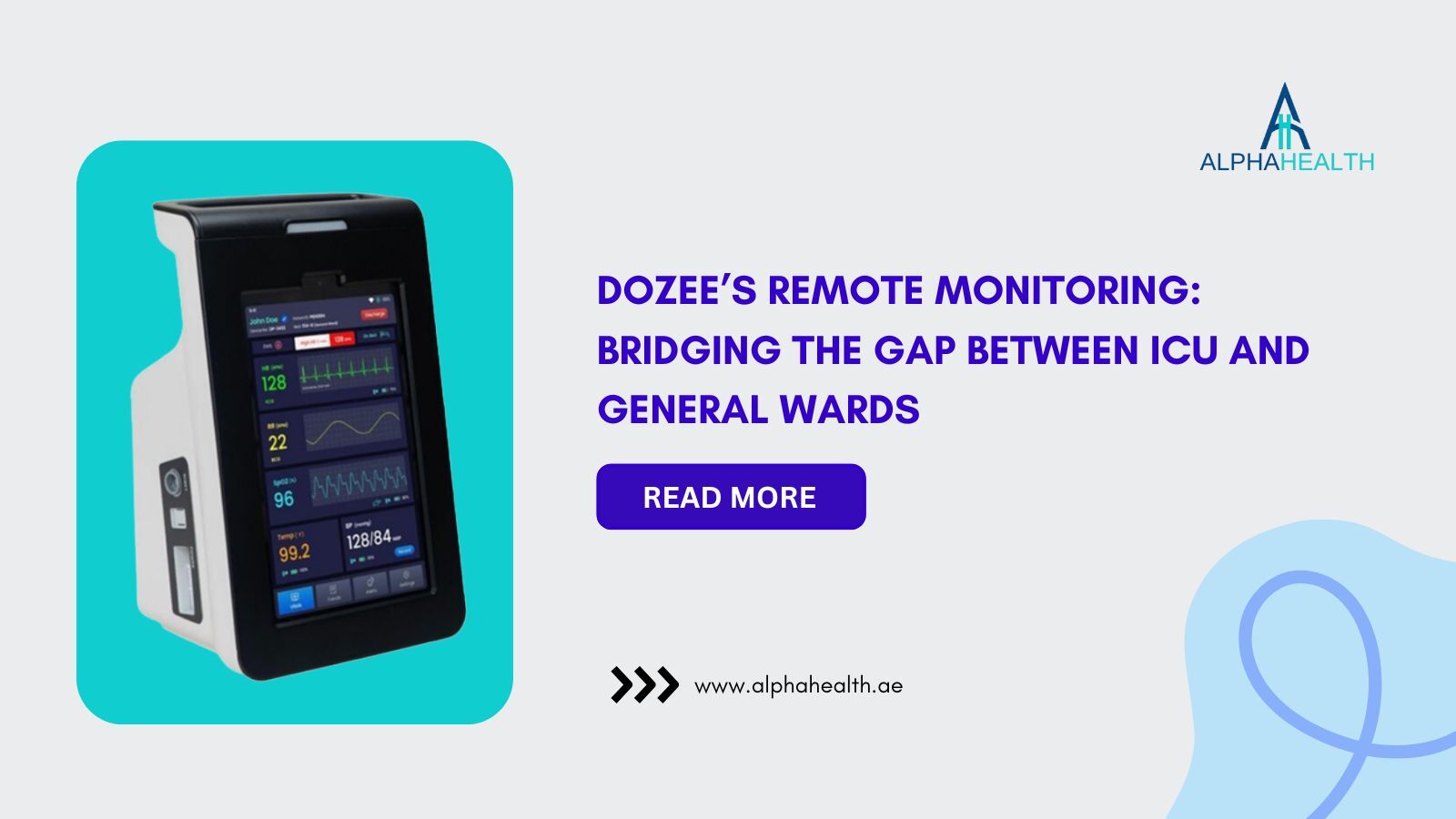
Dozee’s Remote Monitoring: Bridging the Gap Between ICU and General Wards
In many hospitals, especially in resource-constrained settings, there is a critical gap between the intensive monitoring available in Intensive Care Units (ICUs) and the comparatively limited monitoring in general wards or step-down units. Traditional ward care often relies on intermittent manual checks of vitals (heart rate, respiratory rate, blood pressure) every few hours. This leaves room for early warning signs of deterioration to go unnoticed, delays in intervention, and risk of unexpected emergencies.
Dozee is a remote patient monitoring (RPM) system that brings ICU-grade vigilance to general wards and step-down units without invasive devices, cumbersome wires, or the need for continuous bedside supervision.
How Dozee Works: The Technology Behind Safe, Remote Monitoring
- Dozee uses a thin sensor sheet placed under the patient’s mattress. It uses a technique called ballistocardiography (BCG) to capture micro-vibrations produced by heartbeat, respiration, body movements, posture changes, tremors, or sleep patterns.
- These raw signals are transmitted to a communication pod and then to the cloud. Through AI-based algorithms, Dozee converts vibration data into vital-sign metrics such as heart rate, respiratory rate, and other biomarkers with clinical-grade accuracy.
- The system runs continuously, 24 hours a day, 7 days a week, delivering real-time vital signs and trend data to a centralized dashboard or a mobile app accessible to nurses and doctors.
- In advanced configurations, hospitals can integrate additional sensors (for example, for SpO₂, ECG, temperature) to expand the monitored parameters and offer more comprehensive coverage beyond basic vital signs.
This combination of contactless sensing, continuous data capture, and AI-driven analytics transforms ordinary beds into “smart beds,” thus enabling remote ICU-level monitoring even in general wards.

Why Dozee Closes the ICU–Ward Monitoring Gap
Continuous Versus Spot-Check Monitoring
In many wards, vitals are checked manually at intervals (for example every 3 to 6 hours). Dozee ensures continuous monitoring with frequent measurements or real-time data streams. This dramatically reduces the risk of missing early signs of deterioration that appear between spot checks.
Real-Time Early Warning and Alerts
Dozee’s built-in Early Warning System monitors changes in vital sign trends and triggers alerts in real time when it detects early signs of clinical deterioration. This enables timely intervention long before a full-blown crisis occurs.
Efficiency and Scalability: Monitoring Many Patients Remotely
Because data from multiple beds can be aggregated on a single dashboard, nurses and doctors can monitor dozens or hundreds of patients remotely at once. This reduces the demand for high nurse-to-patient ratios typical of ICU wards, while still providing high-level monitoring. This scalability is especially valuable in hospitals where ICU beds are limited but patient load is high.
Non-Invasive and Comfortable for Patients
The contactless sensor sits under the mattress. There are no wires, no cuffs, no sensors attached to the body. Patients rest comfortably without disruption and receive continuous monitoring even while sleeping or moving minimally.
Clinical-Grade Accuracy
Dozee has been clinically validated for accurate measurements comparable to traditional ICU monitors. This ensures that the data used for decision-making is reliable, making Dozee a trusted option for critical care oversight.
What This Means for Hospitals: Improved Care Pathways and Outcomes
By deploying Dozee across step-down units and general wards, hospitals can effectively blur the line between ICU-level care and ward care, creating a continuum of patient safety and vigilance. Some benefits:
- Patients who may not warrant ICU admission but still require close monitoring can stay in general wards with the confidence that any deterioration will be detected early.
- ICU beds are freed up for the most critical patients, optimizing resource utilization across the hospital.
- Workload on nursing staff is reduced because continuous monitoring and alerts replace frequent manual vital checks. Staff can prioritize attention only where needed.
- Overall patient safety improves. The risk of unexpected deterioration, delayed response, or unnoticed complications is significantly reduced.
- Hospitals can scale quality care even with limited infrastructure — this is especially helpful in resource-constrained settings, smaller hospitals, or during patient surges such as epidemics or pandemics.
Challenges and Considerations for Implementation
While Dozee offers transformative capability, successful implementation requires attention to certain practical aspects:
- Hospital staff need appropriate training to interpret alert data, understand Early Warning System thresholds, and respond promptly.
- Integration with existing hospital workflows and record-keeping systems (like EMR/EHR) is necessary for seamless adoption and documentation.
- For best results, hospitals must ensure reliable infrastructure such as stable internet or network connectivity, power supply, sensor maintenance.
- Though Dozee is suitable for many patients, some critically unstable patients may still require direct ICU-level care with traditional monitors, invasive monitoring, or manual oversight.
The Future: Toward a New Standard of Ward Care
With increasing adoption of technologies like Dozee, hospitals can significantly expand critical-care-level monitoring beyond a limited number of ICU beds. This shift can lead to more equitable, safer, and scalable patient care.
As contactless RPM becomes more common, step-down units and general wards will no longer imply lower vigilance. Instead, they can support proactive care, early intervention, and continuous oversight — improving patient safety and outcomes across hospital units.
For medical equipment providers like Alpha Health, integrating and offering such RPM technologies represents a step toward building a more resilient, efficient, and patient-oriented healthcare ecosystem.