
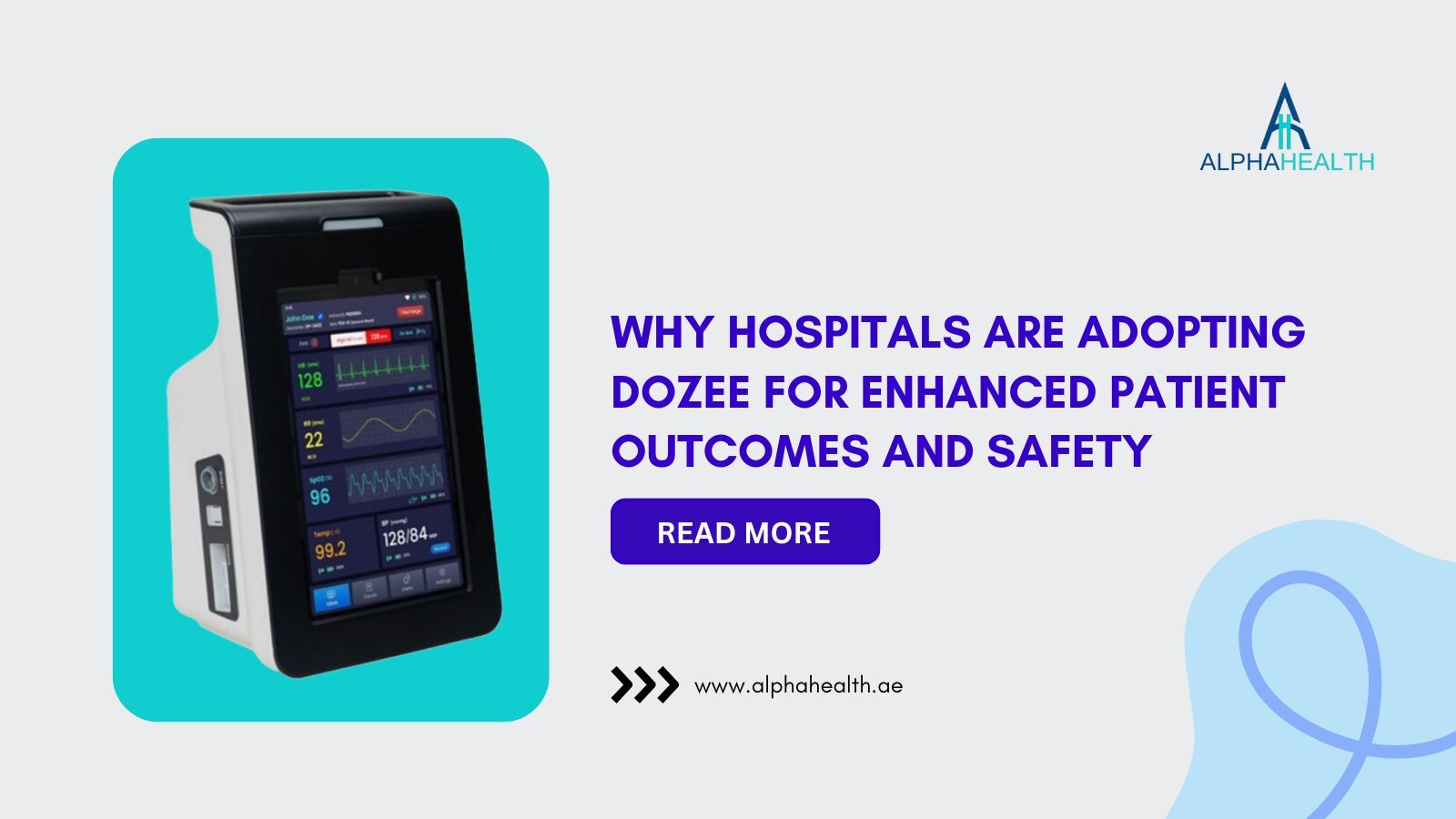
Why Hospitals Are Adopting Dozee for Enhanced Patient Outcomes and Safety
Hospitals today face increasing demands due to aging populations, a rise in chronic illnesses, and limited staff resources. They are under pressure to deliver high-quality care while improving operational efficiency. Continuous monitoring and early detection of risk have therefore become critical priorities. Many advanced hospitals are now turning to Remote Patient Monitoring (RPM) technologies. Dozee has emerged as a leading solution that offers enhanced patient outcomes, stronger safety measures, and better support for healthcare staff.
As a committed medical equipment provider focused on women’s and overall patient wellness, Alpha Health recognizes the value this technology delivers for modern healthcare.
What Is Dozee and How It Works
Dozee is a patient-monitoring solution that uses a sensor sheet placed under a patient’s mattress. It captures micro-vibrations caused by heartbeats, respiration, and movements to continuously monitor vitals including heart rate, respiratory rate, and blood oxygen levels.
These vitals are transmitted to a cloud-based dashboard that uses AI algorithms to identify patterns and detect abnormalities in real time. Healthcare staff can access this data on a centralized screen without any physical contact or manual checks.
Measurable Benefits for Hospitals
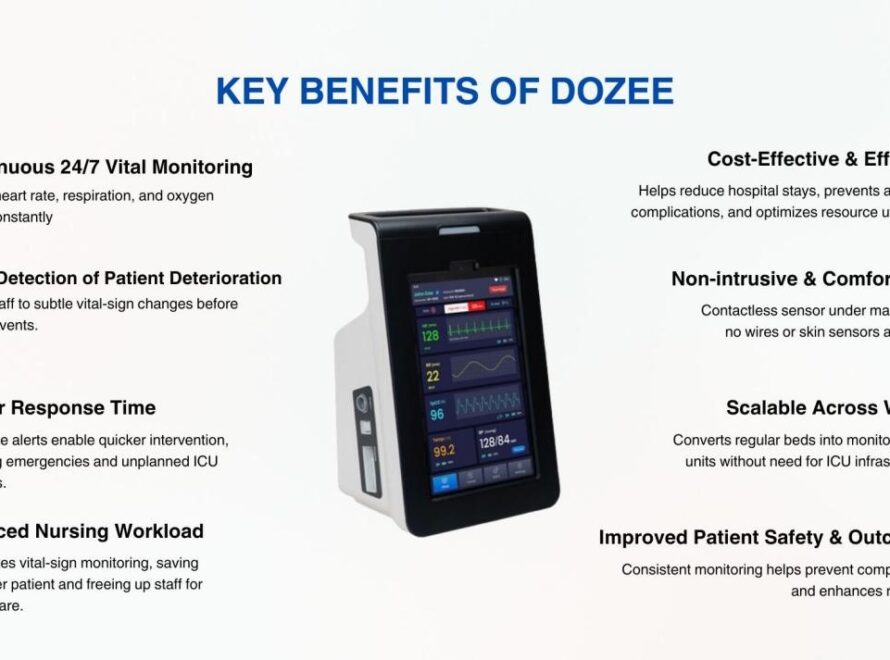
1. Early Detection of Patient Deterioration Improves Survival
Continuous monitoring allows hospitals to detect subtle deterioration much earlier than standard periodic spot checks.
Real time alerts notify care teams instantly so they can intervene before emergencies or unplanned ICU transfers take place. This leads to safer care environments and better clinical outcomes.
2. Reduced Nursing Workload and Time Savings
Manual vital checks consume significant nursing time. Dozee automates this process which reduces the burden on healthcare staff and allows them to focus on critical care tasks.
Some hospitals using Dozee have reported saving approximately 2.5 hours of nursing time per patient every day.
3. Better Data for Stronger Clinical Decisions
With continuous monitoring hospitals gain accurate trending data instead of limited snapshots. This supports timely and informed decisions that lead to faster clinical action and better patient recovery rates.
4. Increased Efficiency Across Hospital Operations
Dozee allows hospitals to upgrade regular beds and wards into continuously monitored environments without building ICU-level infrastructure. This improves resource utilization and patient distribution in facilities with limited beds and staff.
Continuous monitoring can also reduce length of stay and overall treatment costs by enabling prevention rather than late response.
Families and caregivers feel more confident knowing that the hospital has continuous oversight even when staff are away from the bedside.
Why Adoption of Dozee Is Growing
Hospitals are increasingly embracing Dozee because of several business and clinical advantages
- It extends high vigilance beyond ICUs which creates safer environments across wards
- It helps tackle global nursing shortages by reducing repetitive workload
- It improves critical response time and saves more lives
- It supports data driven care and enhances treatment quality
- It increases patient comfort and satisfaction
These measurable improvements make Dozee a compelling choice for patient-centric and efficient hospitals.
What This Means for Alpha Health
As a trusted medical equipment partner Alpha Health plays a strong role in enabling modern healthcare solutions in hospitals and clinics. The adoption of contactless monitoring helps
- Strengthen patient care in maternity and gynecology wards
- Support smaller hospitals with limited ICU facilities
- Reduce risk in post-operative and high dependency units
- Improve monitoring for women with chronic health risks
Offering technologies like Dozee positions Alpha Health as a forward-thinking partner that promotes proactive healthcare.
Considerations for Hospitals
While the advantages are strong hospitals must ensure
- Staff are trained to interpret alerts and respond quickly
- Alert sensitivity settings are properly configured to avoid alarm fatigue
- Data integrates smoothly with existing hospital systems
- Initial training and deployment plans are in place
These steps ensure seamless adoption and maximum impact.
Conclusion
Dozee is transforming monitoring inside hospitals. Continuous and contactless tracking supported by AI alerts helps detect dangers early improves response time reduces staff burden and strengthens patient care. Hospitals benefit from improved operational efficiency and significant clinical gains including lower complication rates and better outcomes.
For Alpha Health this marks a shift toward safer more connected and data powered healthcare. As adoption continues to grow continuous monitoring is likely to become standard practice across wards ensuring that every patient receives vigilant attention throughout their stay.